This week’s throughlines
- Clemency expanded from a headline event into a governing pattern — What began as pardons for people tied to election subversion widened into a broader display of executive protection for political, business, and personal allies, culminating in a broad election-related pardon and additional clemency grants later in the week.
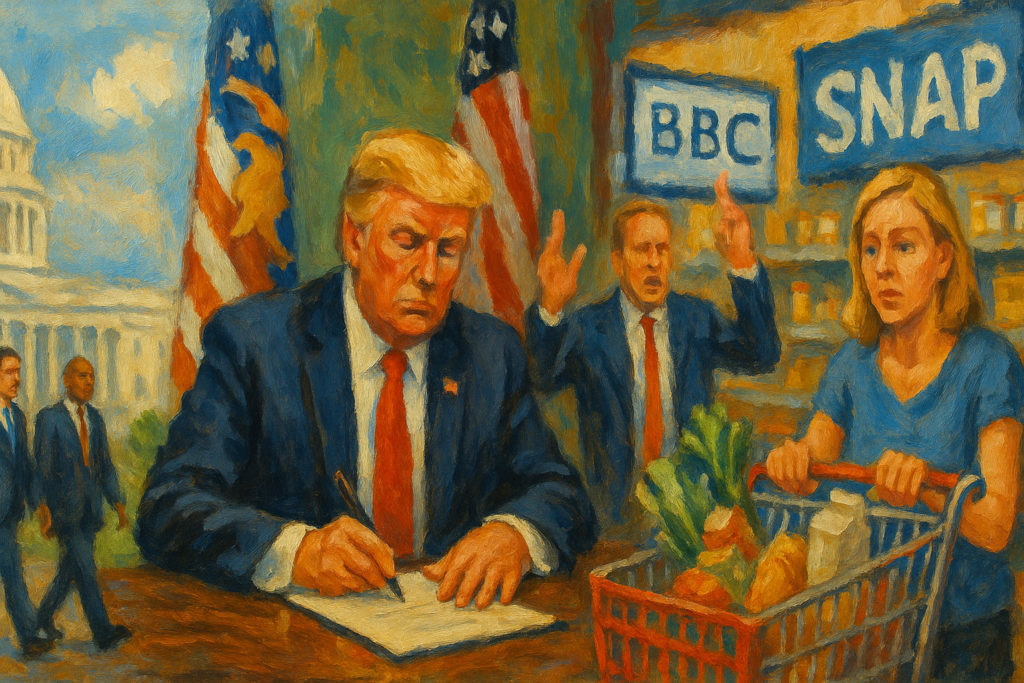
- The shutdown ended, but only after exposing how funding fights can be used to pressure workers and benefit recipients — The week opened with failed compromise talks, threats to Senate procedure, and efforts to reverse SNAP payments. Congress eventually reopened the government, but the deal left healthcare subsidies unresolved and showed how basic services and federal workers remained bargaining chips.
- Immigration enforcement kept colliding with courts, local institutions, and civil liberties — From family arrests and abuse reports to court orders limiting force and releasing detainees, the week showed a repeated cycle: aggressive enforcement, public backlash, and judicial intervention. By week's end, the crackdown was also widening to new cities and new targets, including DACA recipients.
- The Epstein records fight became a test of congressional oversight versus executive control — A delayed House swearing-in changed the math for a discharge petition, Democrats released emails and documents, survivors pressed for disclosure, and Trump responded by trying to influence the process and then directing DOJ to open a new investigation that could affect what gets released.
- Pressure on information systems spread from media and museums to economic data — The administration and its allies pressured media outlets, threatened lawsuits, moved to review Smithsonian content, and by the end of the week were openly undermining the release and reliability of official economic statistics.
The week opened with the federal government still partially shuttered and basic social supports turned into bargaining chips. As the shutdown dragged into its sixth week, Senate Democrats floated a compromise tying a short-term funding bill to a one-year extension of Affordable Care Act premium tax credits and subsidies. The White House and its allies rejected that as an insurance “bailout,” signaling that reopening government would not come with guarantees on health coverage. At the same time, the administration moved on a second front: it asked the Supreme Court to stay lower-court orders requiring emergency SNAP payments, effectively freezing $4 billion in food aid for 42 million people. USDA prepared to reverse full November benefits and warned states they could lose administrative funding or face liability for overpayments if they did not comply, putting governors and agencies in the position of either clawing back food assistance or risking federal punishment.
Over the same weekend, Trump sketched out a set of radical economic and health ideas that underscored how the administration was reframing long-term policy as short-term cash politics. He floated abolishing private health insurance in favor of small direct government payouts, a proposal that would leave people with serious illnesses exposed to catastrophic costs. Senate Republicans, for their part, promoted replacing Obamacare with health savings accounts. Trump also touted a $2,000 “tariff dividend” check for most Americans, claiming tariffs had generated vast revenues, and separately suggested $2,000 checks as an alternative to extending ACA subsidies. None of these ideas advanced in Congress, but they set a tone: structural protections could be traded for one-off payments tied to presidential branding.
The weekend also saw the president wield the pardon power in ways that bound financial interests and political loyalty more tightly to the White House. Trump pardoned Binance founder Changpeng Zhao shortly after a $2 billion stablecoin deal with a Trump-linked firm, and granted clemency to Troy Lake, convicted of disabling diesel emissions controls. More consequentially, he issued sweeping pardons to dozens of figures involved in efforts to overturn the 2020 election, including Rudy Giuliani, Mark Meadows, John Eastman, and others. These actions insulated key architects of election subversion from federal charges even as state cases remained open, signaling that proximity to the president could erase serious legal exposure.
Other institutions pushed back. A federal judge in Oregon issued a final order blocking the administration from deploying National Guard troops to Portland, finding no credible evidence of violence that would justify militarized intervention. In a separate act of protest, longtime U.S. District Judge Mark Wolf resigned, saying he could not stay silent about what he saw as partisan misuse of the law by the White House. On the immigration front, the administration sent 252 Venezuelan men to a notorious prison in El Salvador, describing their migration as “irregular warfare” despite only a small fraction facing serious charges. An ICE arrest in Fitchburg, Massachusetts, went viral after a man collapsed while holding a child; ICE claimed he faked a medical emergency, while he alleged agents pushed and hit him. New biometric and registration rules for Canadian visitors expanded surveillance at the northern border. Together, these moves deepened a security-first approach to migration and raised questions about due process and proportionality.
Economic policy and presidential business interests also intersected over the weekend. Working with FHFA director Bill Pulte, the administration promoted 50-year FHA-style mortgages that would lower monthly payments but significantly increase lifetime interest and slow equity building. At the same time, the Trump Organization began selling Trump-branded wine and cider in Coast Guard-run exchanges, using tax-advantaged military retail space to market the president’s private goods. In the media sphere, right-wing outlet The Blaze published a story naming a former Capitol Police officer as the January 6 pipe bomber based on a computer analysis of her walk. The claim, lacking credible evidence, was widely amplified before the outlet paused further reporting after consulting lawyers, illustrating how speculative accusations can endanger individuals and muddy ongoing investigations.
By Sunday, the shutdown logjam began to break. The Senate advanced a House-passed stopgap funding bill to end what had become a 40-day shutdown, with eight Democrats and an independent joining Republicans. The package funded government through late January, reversed shutdown-related layoffs, and promised only a future vote on ACA subsidies. The votes exposed divisions within the Democratic caucus between those insisting on concrete healthcare guarantees and those prioritizing the immediate reopening of government. The weekend also brought quieter but telling developments: additional pardons for election-related and environmental offenders, and an agreement by the FBI director to maintain an agent in London to support MI5 surveillance despite White House budget cuts, reinforcing a pattern of selective clemency and opaque security adjustments.
On Monday, the Senate completed its move from brinkmanship to resolution. It narrowly advanced and then approved the compromise funding package with exactly 60 votes, ending the longest shutdown in U.S. history. The bill restored funding through January 30, 2026, reversed mass federal layoffs, and guaranteed back pay, but it omitted extensions of ACA health tax credits and SNAP enhancements. The same eight Democrats who had broken ranks over the weekend joined Republicans again, drawing criticism from within their party for reopening government without securing healthcare or food protections. While operational chaos at agencies would soon ease, millions of low-income households and ACA enrollees were left facing higher costs and uncertainty.
Trump’s use of clemency continued on Monday in ways that underscored how legal outcomes for elites were increasingly tied to political networks. He issued additional pardons and commutations, including for Michael McMahon, convicted of acting as an agent of the Chinese government, and Jonathan Braun, a fraudster with family ties to Jared Kushner. He quietly pardoned Robert Harshbarger Jr., husband of Rep. Diana Harshbarger, for health-care fraud. These came on top of the weekend’s mass pardons for 2020 election figures and a broader wave of relief for January 6 participants and business allies. The pattern suggested that the pardon attorney’s office was being used to reward loyalty and family connections rather than to correct miscarriages of justice.
Elsewhere in Washington, the administration moved to punish disfavored jurisdictions and dismantle regulatory guardrails. Trump announced plans to pull federal funding from New York City, widely seen as an attempt to sabotage the incoming progressive mayor’s agenda on transit, childcare, and housing. The Justice Department’s Office of Legal Counsel issued an opinion arguing that the Consumer Financial Protection Bureau could not draw funds from the Federal Reserve while its earnings were negative, and White House budget director Russell Vought publicly vowed to shut the agency down within three months. DOJ also filed a court claim attacking the CFPB’s funding mechanism. These steps combined legal theory, budgetary pressure, and litigation to weaken the consumer watchdog created after the financial crisis.
Courts and state actors were also at odds over political maps and immigration enforcement. In Utah, a judge rejected GOP-drawn congressional lines and approved a map consolidating Salt Lake County into a single, more competitive district, creating a Democratic-leaning seat. Republican state Rep. Matt MacPherson responded by announcing plans to file articles of impeachment against the judge, accusing her of abusing power and violating separation of powers. In Illinois, multiple federal judges issued rulings blocking the administration from deploying National Guard troops for immigration enforcement and, in Chicago, Judge Sara Ellis imposed a restraining order limiting ICE’s use of force amid reports of aggressive Operation Midway Blitz raids. These decisions reinforced legal limits on militarized domestic enforcement even as they provoked political retaliation.
Monday also brought a Supreme Court development with national reach: the justices agreed to hear Watson v. Republican National Committee, a challenge to Mississippi’s law allowing mail ballots postmarked by Election Day to be counted if received within five business days. The Fifth Circuit had struck the law down, arguing federal law requires a single election day. The outcome could affect similar grace-period rules in 16 states, the District of Columbia, Guam, and Puerto Rico, potentially narrowing how states count timely mailed ballots. Meanwhile, Trump threatened air traffic controllers who refused to work without pay during the shutdown with “negative marks” and no severance, while promising $10,000 bonuses to those he deemed “true patriots.” USDA and DOJ continued to maneuver to keep SNAP emergency payments blocked, showing how executive leverage could be applied both to essential workers and to vulnerable families.
On Tuesday, the consequences of the shutdown deal and the administration’s SNAP strategy became clearer. The Supreme Court extended an administrative stay allowing the government to continue withholding $4 billion in SNAP funding, keeping a lower-court order on hold. USDA directed states to undo full November benefits and even claw back funds already issued, warning of lost administrative cost shares and liability for overpayments. Several states signaled they would challenge the directives, but for tens of millions of recipients, food assistance remained uncertain and the lines of accountability between courts, agencies, and the White House were blurred.
The House, which had been absent for 50 days, returned to vote on the Senate’s shutdown-ending bill. It passed 222–209, and Trump signed it the next day, formally ending the 43-day shutdown. The legislation funded government through January but did not extend ACA health tax credits, leaving many facing higher premiums in the new year. A little-noticed provision allowing senators to sue DOJ for surveillance damages drew criticism and prompted Speaker Mike Johnson to promise repeal, raising questions about self-dealing provisions slipped into must-pass bills. The end of the shutdown restored federal services but left unresolved fights over healthcare affordability and food security.
Beyond fiscal policy, Tuesday highlighted struggles over culture, environment, and speech. New reporting showed the administration had sent the Smithsonian a letter flagging “overly negative” portrayals of U.S. history and planned a review of exhibits, especially on African and African American history. An executive order directed the institution to remove content deemed “improper, divisive, or anti-American.” A survey by the American Alliance of Museums found one-third of U.S. museums had lost federal grants or contracts since Trump took office, forcing program cuts. At the EPA, the agency proposed rolling back PFAS reporting requirements by exempting low-percentage, byproduct, imported, and research uses, reducing visibility into chemicals linked to cancer, even as it approved Utah’s interstate ozone transport plan and extended deadlines on other chemical rules. These moves showed how selective deregulation and content pressure could reshape environmental risk and public memory.
Immigration enforcement remained a flashpoint. As Operation Midway Blitz raids continued in Chicago, reports emerged of aggressive tactics, including alleged pepper-spraying of a family with a one-year-old and the arrest of a daycare worker in front of children. Judges in Illinois responded by limiting ICE’s use of force, ordering the release on bond of hundreds of detainees, ruling specific arrests unlawful, and barring coercive “voluntary” deportations. In parallel, civic groups in North Carolina organized town halls on Medicaid funding and workshops on responding to ICE operations, illustrating how local organizing tried to fill gaps left by national institutions. Corporate sponsors also came under scrutiny: brands like Beam, Eight Sleep, and Rocket Money were criticized for sponsoring Tucker Carlson’s podcast after he hosted white supremacist Nick Fuentes; Rocket Money later ended its sponsorship. And in higher education, the CDC’s “wild to mild” flu vaccination campaign was halted, leaving pediatricians to fill a communication gap during a severe flu season, while professors in Kentucky and Texas sued over bans and retaliation tied to their speech on Israel, reflecting tightening boundaries around academic dissent.
Wednesday shifted the national focus to a different kind of accountability fight: the long-shadowed Jeffrey Epstein case. House Oversight Democrats released emails from 23,000 subpoenaed Epstein estate documents, including exchanges with Ghislaine Maxwell and journalist Michael Wolff that described Trump as “that dog that hasn’t barked” and said he “knew about the girls,” contradicting the president’s public denials. On the same day, Adelita Grijalva was sworn in and became the 218th signer on a discharge petition forcing a House vote on releasing DOJ’s Epstein files. The White House had pressured some Republicans to withdraw support, but members like Nancy Mace refused, citing personal experiences of abuse. With the petition reaching the threshold, control over a sensitive transparency fight shifted from leadership and the executive branch to a bipartisan House majority.
Immigration policy hardened further midweek. Shortly after returning to office, Trump had terminated the CBP One mobile app, which had allowed tens of thousands of people in Mexico to schedule legal asylum appointments. Reporting from Eagle Pass, Texas, described intensified deportation operations that arrested parents with children, appeared at schools, and mistakenly detained U.S. citizens, leaving communities unsettled. A local business owner in Eagle Pass filed suit against Texas Governor Greg Abbott’s Operation Lone Star, challenging the installation of floating buoys with saw-blades in the Rio Grande on environmental and community grounds. At the same time, the Supreme Court’s stay kept SNAP funds frozen while USDA notices demanding states claw back November benefits sowed confusion, and DOJ pressed ahead with its claim that the CFPB’s funding mechanism was unlawful. These moves collectively destabilized food assistance and consumer protection, two pillars of economic security for low- and middle-income households.
Wednesday also brought smaller but telling developments in oversight and media. The Georgia state election board settled a lawsuit with watchdog group American Oversight over members’ use of private email for official business, agreeing to use official accounts and avoid ephemeral messaging apps, a modest but important step for record-keeping in a state central to recent election disputes. Rocket Money formally announced it had ended its sponsorship of Tucker Carlson’s podcast, deactivating a special URL and pledging to review its ad placement processes, an example of public pressure reshaping the financial ecosystem of extremist media.
By Thursday, the Epstein transparency confrontation had fully arrived on the House floor. With the discharge petition at 218 signatures, Speaker Mike Johnson announced the House would vote the following week on a bill compelling DOJ to release Epstein files, scheduling it earlier than required. House Democrats blocked an attempt to pass the bill by unanimous consent, ensuring a recorded vote that would force members to take public positions. Survivors of Epstein and Ghislaine Maxwell delivered a letter urging Congress to support the Epstein Files Transparency Act. Republicans split publicly: Marjorie Taylor Greene and Thomas Massie championed transparency, while Tim Burchett refused to sign the petition, citing concerns about misuse of names. The stage was set for an unprecedented vote on exposing elite abuse networks, despite pressure from Trump and party leadership.
The White House responded by trying to reframe the narrative. As more Epstein estate emails reached Congress, including a new batch of roughly 20,000 that further implicated Trump’s knowledge, the president directed Attorney General Pam Bondi and DOJ to investigate Epstein’s ties to Democrats like Bill Clinton and Reid Hoffman, calling the focus on his own links an “Epstein hoax.” Whistleblower accounts described preferential treatment for Ghislaine Maxwell in prison, and staff were fired for leaking her attorney-client emails to Rep. Jamie Raskin. The episode showed how control over prosecutorial priorities could be used to redirect scrutiny and manage public memory.
Trump’s clemency decisions continued to favor wealthy offenders. He pardoned British billionaire Joe Lewis, convicted of insider trading, allowing him to travel to the U.S. for medical care and family visits while leaving fines in place. He also signed the spending package ending the 43-day shutdown and issued an executive order on foster care, directing HHS to modernize child welfare data systems and expand partnerships with faith-based organizations. In the economic realm, a top Trump adviser admitted the administration might no longer produce reliable inflation or employment data due to hollowing out the Bureau of Labor Statistics, saying they were trying to “concoct” numbers. Confidential Fannie Mae mortgage pricing data was leaked to a competitor, raising collusion concerns, and South Dakota Governor Kristi Noem’s DHS bypassed competitive bidding to award a $200 million anti-immigration ad campaign to a politically connected firm. These revelations pointed to captured institutions where core statistics and procurement processes were being bent toward political ends.
Immigration and civil liberties remained under strain. Seven detainees at the California City ICE detention center filed a federal class-action lawsuit alleging inhumane conditions, including medical neglect, inadequate food, sewage issues, and extreme temperatures at a facility run by private contractor CoreCivic. DHS denied the allegations, but the case highlighted how outsourcing detention can obscure accountability. Former FBI director James Comey and New York Attorney General Letitia James moved to dismiss criminal charges against them, arguing that U.S. attorney Lindsey Halligan had been unlawfully appointed by Attorney General Pam Bondi at Trump’s request, bypassing Senate confirmation. The case in Alexandria, Virginia, tested whether such appointments could be used to target political adversaries. Meanwhile, members of Georgia’s election denial movement claimed that Trump-aligned DOJ officials were investigating debunked 2020 fraud allegations, seeking access to ballots and voter registration lists and working with state election boards. Critics warned this represented a shift from protecting voting rights to validating baseless narratives that could justify new restrictions.
Thursday also illustrated how new technologies and foreign policy choices were reshaping the public sphere. In New York City’s mayoral race, Andrew Cuomo shared AI-generated videos depicting opponent Zohran Mamdani in racially charged scenes, while Eric Adams used AI robocalls in multiple languages and a dystopian AI video of New York to attack Mamdani. Separately, Trump shared an AI video of himself flying a fighter jet and dropping brown fluid on Americans during the No Kings protests. Internationally, the UK suspended intelligence sharing with the U.S. on suspected drug trafficking vessels in the Caribbean, fearing complicity in potentially unlawful U.S. strikes that killed dozens, and the detention of commentator Sami Hamdi as a “terrorist sympathizer” over his criticism of Israel underscored how immigration powers could be used against speech critics. In Europe, Germany’s nuclear ban and the UK’s halt to new offshore oil and gas exploration pushed both countries toward renewables while contributing to high energy costs, even as Trump imposed new tariffs on European goods and granted Switzerland a favorable tariff break shortly after receiving gold gifts from Swiss industry leaders.
The week closed on Friday with further disclosures and legal maneuvers that underscored how much of the country’s democratic life now runs through courts and document releases. Republican members of the House Oversight Committee released 20,000 pages of Epstein documents detailing coordinated efforts to suppress negative press and rebuild his image after his 2008 plea. The records showed how Epstein and his associates hired PR firms, managed search results, and tried to influence coverage, offering a detailed look at how a wealthy predator used money and media expertise to shape public perception. In Georgia, Pete Skandalakis, head of the state’s Prosecuting Attorneys’ Council, appointed himself to take over the 2020 election interference case against Trump and others after Fulton County DA Fani Willis was removed for a conflict of interest. His move prevented the case from collapsing and set a pretrial status conference for December 1, keeping alive one of the few remaining avenues for legal accountability over attempts to overturn the 2020 election.
In a different courtroom, a federal bankruptcy judge announced plans to approve a $7 billion settlement with Purdue Pharma, requiring the Sackler family to contribute funds and relinquish ownership, and converting the company into a nonprofit focused on addiction treatment. The deal, which replaced a prior agreement rejected by the Supreme Court, represented a major institutional response to corporate responsibility in the opioid epidemic, even as critics argued it still allowed the Sacklers to avoid full accountability. The Justice Department joined California Republicans in a federal lawsuit challenging the state’s new congressional map backed by Governor Gavin Newsom, arguing it improperly used race to favor Hispanic voters. DOJ’s alignment with one party’s redistricting challenge raised questions about whether federal voting-rights enforcement was being applied neutrally or as a partisan tool.
Shutdown aftershocks were still visible. During the closure, the administration had chosen to keep all national parks open despite furloughing most National Park Service workers. Former NPS director Jonathan Jarvis and others reported fires, vandalism, and safety issues due to the lack of staff to manage visitors and protect resources. Interior officials defended the decision as maintaining stability, but the episode showed how shutdown tactics could sacrifice public safety and environmental stewardship for political optics. At the EPA, the agency extended the postponement of certain trichloroethylene regulation provisions under TSCA until February 2026 while litigation proceeds, keeping contested restrictions on hold, and approved Texas’s application for primacy over Class VI carbon sequestration wells, allowing the state’s Railroad Commission to issue and enforce permits except on tribal lands. These decisions shaped how quickly health-protective rules would take effect and who would oversee emerging carbon storage projects.
Finally, the week’s disputes over speech and protest returned to campus and city politics. Two University of Texas at Dallas professors sued the university and state officials over alleged retaliation after peaceful protest arrests, while the Anti-Defamation League announced an initiative to monitor New York City mayor-elect Zohran Mamdani for antisemitism. Both developments reflected intensifying arguments over how criticism of Israel, campus activism, and antisemitism are defined and policed, and how legal and advocacy tools are being used to draw lines around acceptable speech.
Taken together, the week’s events showed institutions under strain but still in motion. Congress ended a record shutdown but left core social protections exposed. The president used pardons and executive power to shield allies and reshape regulatory agencies, even as courts blocked some overreach and processed massive settlements. Immigration crackdowns met judicial limits and local resistance, while the fight over Epstein files forced an unprecedented transparency showdown between a bipartisan House majority and the White House. Underneath these headline battles, the admission that economic data were being “concocted,” the hollowing out of watchdogs, and the spread of AI-driven propaganda all pointed to a deeper contest over who controls information, accountability, and the basic facts on which democratic decision-making depends.